Abstract
Infectious diseases remain a serious global health threat, which is increasingly amplified by growing antimicrobial resistance worldwide. Traditional remedies, such as cow urine (Gaumutra), have been historically documented in Ayurvedic medicine for their therapeutic applications. Notably, Cow urine has been granted a US patent (no. 6410059) for its antibacterial and bio-enhancing properties. This study investigates the in-vitro antibacterial activity and bio-enhancing capacity of cow urine against clinically isolated bacterial pathogens. A laboratory-based cross-sectional study was conducted at the Manmohan Memorial Institute of Health Sciences (MMIHS) and Manmohan Memorial Teaching Hospital, Kathmandu. Four clinical bacterial isolates (Escherichia coli, Klebsiella pneumoniae, Staphylococcus aureus, and Enterococcus faecalis) were used. Thirty cow urine samples were collected from various locations in the Kathmandu valley and processed into fresh, distilled, and photoactivated forms. Antibacterial activity was assessed using the agar well diffusion method, comparing the Zone of Inhibition (ZOI) with standard antibiotics. Optical density at 600 nm was recorded to evaluate growth-inhibition kinetics (turbidity). Only fresh cow urine demonstrated antibacterial activity showing effectiveness exclusively against Gram-positive bacteria: Staphylococcus aureus (23%) and Enterococcus faecalis (23%). Antibacterial activity was statistically associated with acidic pH, although activity persisted after pH adjustment. Cow urine also showed significant bio-enhancing capacity when combined with standard antibiotics against Klebsiella pneumoniae (20.63±1.9 mm), Staphylococcus aureus (17.93±4.0 mm), and Enterococcus faecalis (17.8±3.1 mm). Urea alone, at the concentrations measured in the active samples, produced no measurable inhibition under the experimental conditions. Overall, fresh cow urine exhibited measurable in vitro antibacterial and antibiotic-enhancing activity under the conditions tested, particularly against Gram-positive bacteria. Further studies are warranted to identify and characterize the bioactive compounds responsible for these activities and to elucidate their potential mechanisms of action.
Keywords
Cow Urine, Gaumutra, Antibacterial Activity, Bioenhancer, Escherichia Coli, Klebsiella Pneumoniae, Staphylococcus Aureus, Enterococcus, Nepal
1. Introduction
Bacterial infections represent a persistent and escalating threat to global public health. The increasing incidence of antimicrobial resistance limits the therapeutic options available worldwide, and the World Health Organization has designated this resistance as a top global public health threat
| [1] | Rana, R and De S. In vitro antimicrobial screening of cow urine – a potential natural antimicrobial agent. Int J bioassays. 2013; 2(2): 436-439. https://doi.org/10.1002/jcu.22607 |
[1]
. In developing countries like Nepal, the challenges are even more pronounced. Approximately 90% of the Nepalese population resides in rural areas where access to modern antibiotics is limited and expensive, making traditional and alternative remedies particularly valuable and relevant. In fact, traditional medicine provides healthcare for up to 80% of the population in rural areas
| [2] | Joshi DR, Aryal P, Chaudhary MK, et al. Study of in-vitro Antioxidant and Antibacterial Activity of Cow Urine from Different Altitudinal and Climatic Region of Nepal. Microbiol Res J Int. 2019; 29(2): 1-8.
https://doi.org/10.9734/mrji/2019/v29i230158 |
[2]
.
Cow urine, traditionally referred to as
Gaumutra, has been extensively used in Ayurvedic medicine for centuries to treat a diverse array of ailments, including infectious diseases, gastrointestinal disorders, and metabolic conditions. Classical Ayurvedic texts, including the Charaka Samhita, Susruta Samhita, and Astanghridaya, document its therapeutic applications in detail
| [1] | Rana, R and De S. In vitro antimicrobial screening of cow urine – a potential natural antimicrobial agent. Int J bioassays. 2013; 2(2): 436-439. https://doi.org/10.1002/jcu.22607 |
[1]
. Cow urine is a primary component of panchagavya, an Ayurvedic preparation containing cow urine, dung, milk, curd, and ghee, which remains widely utilized in traditional medical practice
.
Scientific and biochemical analyses of cow urine have identified numerous bioactive compounds, including urea, uric acid, creatinine, phenolic compounds, minerals, enzymes, hormones, trace elements, and vitamins A, B, C, D, and E
| [4] | Jain NK, Gupta VB, Garg R, Silawat N. Efficacy of cow urine therapy on various cancer patients in Mandsaur District, India-A survey. Int J Green Pharm. 2010; 4(1): 29-35.
https://doi.org/10.4103/0973-8258.62163 |
[4]
. Notably, phenolic compounds present in the urine have been shown to demonstrate bactericidal properties against both Gram-positive and Gram-negative bacteria. This complex biochemical composition provides a strong scientific basis for investigating the purported antimicrobial properties documented in traditional medicine. The therapeutic value of cow urine was globally recognized when it was granted United States (US) patent number 6410059 for its antibacterial and bio-enhancing properties.Bioenhancers are defined as substances that lack direct pharmacological activity but improve drug bioavailability, bioactivity, or tolerability when utilized in combination therapy
| [4] | Jain NK, Gupta VB, Garg R, Silawat N. Efficacy of cow urine therapy on various cancer patients in Mandsaur District, India-A survey. Int J Green Pharm. 2010; 4(1): 29-35.
https://doi.org/10.4103/0973-8258.62163 |
| [5] | Mahajan SP, Chavan SA, Shinde SA, Narkhede MB. Miraculous Benefits of Cow Urine: A Review. J Drug Deliv Ther. 2020; 10(4-s): 275-281.
https://doi.org/10.22270/jddt.v10i4-s.4267 |
| [6] | Peterson B, Weyers M, Steenekamp JH, Steyn JD, Gouws C, Hamman JH. Drug bioavailability enhancing agents of natural origin (bioenhancers) that modulate drug membrane permeation and pre-systemic metabolism. Pharmaceutics. 2019; 11(1): 33. https://doi.org/10.3390/pharmaceutics11010033 |
| [7] | Krishnamurthi K, Dutta D, Sivanesan SD, Chakrabarti T. Protective effect of distillate and redistillate of cow’s urine in human polymorphonuclear leukocytes challenged with established genotoxic chemicals. Biomed Environ Sci. 2004; 17(3): 247-256.
https://pubmed.ncbi.nlm.nih.gov/15602821/ |
[4-7]
.
Recent studies suggest that cow urine may serve as a natural bioenhancer, potentially augmenting the efficacy of standard antibiotics and thereby reducing the required dosage and associated side effects
| [1] | Rana, R and De S. In vitro antimicrobial screening of cow urine – a potential natural antimicrobial agent. Int J bioassays. 2013; 2(2): 436-439. https://doi.org/10.1002/jcu.22607 |
[1]
. However, there is conflicting evidence in the scientific literature regarding the optimal form of cow urine for therapeutic use. Some studies report the superior antimicrobial activity of fresh cow urine
| [8] | Upadhyay RK, Dwivedi P, Ahmad S. Antimicrobial activity of photo-activated cow urine against certain pathogenic bacterial strains. Afr J Biotechnol. 2010; 9(4): 518–522.
https://doi.org/10.5897/AJB09.1047 |
[8]
, whereas others demonstrate the effectiveness of photoactivated preparations
.
Given the scarcity of localized research in Nepal regarding this traditional practice, this study aims to evaluate the antibacterial activity of various forms of cow urine (fresh, distilled, and photoactivated) against common clinical bacterial pathogens. Furthermore, the study seeks to determine the bio-enhancing potential of cow urine when combined with standard antimicrobial agents and to explore the correlation of its activity with intrinsic factors such as pH and urea concentration.
2. Materials and Methods
2.1. Study Design and Setting
A laboratory-based cross-sectional study was carried out over a duration of six months, from October 2023 to March 2024. Sample collection and initial bacterial isolation procedures were performed at the Manmohan Memorial Teaching Hospital (MMTH) in Swoyambhu, Kathmandu. All subsequent microbiological testing and antibacterial assessments were conducted at the microbiology laboratory of the Manmohan Memorial Institute of Health Sciences (MMIHS) located in Soalteemode, Kathmandu, Nepal.
2.2. Sample Collection and Processing
2.2.1. Clinical Urine Samples
Mid-stream urine samples were collected aseptically from patients attending MMTH and cultured on cysteine lactose electrolyte deficient (CLED) agar and incubated aerobically at 37°C for 24 hours. Following incubation, bacterial identification was performed utilizing standard Clinical and Laboratory Standards Institute (CLSI) guidelines
| [10] | Javed S, Ahsan W, Kohli K. The concept of bioenhancers in bioavailability enhancement of drugs – A patent review. J Sci Lett. 2016; 1(3): 143-165. |
[10]
. These techniques included morphological observation, Gram staining, catalase testing, coagulase testing, oxidase testing, and a comprehensive suite of biochemical media (Triple Sugar Iron agar, Sulfide Indole Motility media, Simon's citrate agar, and urea hydrolysis testing). Four distinct and most common urinary bacterial strains were successfully isolated from different patients and identified:
Escherichia coli,
Klebsiella pneumoniae,
Staphylococcus aureus, and
Enterococcus faecalis. These clinical isolates were maintained at 4°C on agar-agar for the duration of the experiments.Species identification relied on conventional morphological and biochemical tests.
2.2.2. Cow Urine Samples
Thirty individual cow urine samples (100 mL each) were collected directly into sterile containers from various cow farms located within the Kathmandu valley. Informed consent was obtained from the farm owners prior to collection. Animals those were diseased or under antimicrobial medication were excluded from the study. The collected samples were processed into three distinct forms for evaluation as described below.
Fresh urine (FU): This form was utilized without chemical modification. It was filtered through Whatman No. 1 filter paper and stored at 4°C. The intrinsic pH and potential bacterial contamination were assessed prior to any antibacterial testing.
Cow Urine Distillate (CUD): Each fresh urine underwent a distillation process at 100°C. Subsequently, the pH of the distillate was adjusted to below 2.0 by adding 85% orthophosphoric acid. The acidified mixture was then subjected to a second distillation at 100°C to facilitate the removal of ammonia. The final double-distilled product was stored at 4°C in sterile glass flasks
| [11] | Sathasivam A, Muthuselvam M, Rajendran R. Antimicrobial activities of cow urine distillate against some clinical pathogens. Glob J Pharmacol. 2010; 4(1): 41-44. |
| [12] | Khanuja SPS, Singh M, Gupta C, Kumar V, Dawle SH, Naff PE david M. United States Patent : US006410059B1. 2002; 1(60). US006410059B1. |
[11, 12]
.
Photoactivated urine (PAU): Each fresh urine samples were placed in sealed glass bottles and exposed to direct sunlight for a continuous period of 144 hours to achieve photoactivation. Post-exposure, the samples were filtered through Whatman No. 1 filter paper to remove precipitates and stored at 4°C
| [13] | Ahuja A, Kumar P, Verma A, Tanwar RS. Antimicrobial activity of cow urine against clinical isolates of human pathogens. Int J Curr Microbiol App Sci. 2015; 4(8): 728-34. |
[13]
.
Antimicrobial Susceptibility Testing (AST): The inherent antibiotic susceptibility profile of the four clinical isolates was determined using the Kirby-Bauer disc diffusion method performed on Mueller-Hinton agar. Standard antibiotic discs (Hi-media, India) were applied to the inoculated plates in strict accordance with the CLSI guidelines. Following the AST profiling, the antibiotic demonstrating the highest sensitivity for each respective organism was selected as the standard drug for comparison and combination assays. Cefixime (CFM) was chosen for the Gram-negative isolates, and meropenem (MRP) was selected for the Gram-positive isolates. Because E. coli was susceptible only to cefixime, cefixime was used as the common reference drug for both Gram-negative isolates, so that comparisons were made against the same antibiotic; meropenem was used for the Gram-positive isolates as the antibiotic to which both were sensitive. The zone diameters and interpretive categories for all antibiotics tested against each isolate.
Assessment of Antibacterial Activity:The primary antibacterial efficacy of the diverse cow urine preparations was evaluated utilizing the agar well diffusion method. Mueller-Hinton agar plates were evenly inoculated with standardized bacterial suspensions matching a 0.5 McFarland standard (equivalent to approximately 1.5×10⁸ colony-forming units (CFU)/mL). Wells, each 8 mm in diameter, were meticulously created in the agar using a sterile borer. Each well was subsequently filled with 100 µL of the respective cow urine preparation (fresh, CUD, and photoactivated). The plates were incubated aerobically at 37°C for 24 hours, after which the resulting Zones of Inhibition (ZOI) were quantitatively measured in millimeters.
Optical density measurement (Time-Kill Assay): To ascertain the kinetics of bacterial growth inhibition, a spectrophotometric analysis was conducted. Each bacterial strain was suspended directly in fresh cow urine (1 mL per vial), with five replicates prepared per organism. The optical density (OD) at a wavelength of 600 nm was recorded at baseline (0 hours), at 30 minutes and then at 1 hour interval for the initial 5 hours. A final OD measurement was taken at the 24-hour mark. A progressive decrease in the OD values over time served as a direct indicator of growth inhibition
| [13] | Ahuja A, Kumar P, Verma A, Tanwar RS. Antimicrobial activity of cow urine against clinical isolates of human pathogens. Int J Curr Microbiol App Sci. 2015; 4(8): 728-34. |
[13]
.
Evaluation of Intrinsic Factors (pH and Urea):To determine if the antibacterial activity was strictly pH-dependent, experimental modifications were introduced. The active cow urine samples were adjusted to acidic (original), neutral (pH 7.0), and basic (pH 8.2-8.4) levels by the dropwise addition of sterile dilute hydrochloric acid (HCl) or sodium hydroxide (NaOH). The agar well diffusion ZOI measurements were then repeated for each modified pH condition against the susceptible isolates.The pH-modification experiment was performed on the seven active samples (n = 7) at each pH level.
The inherent urea concentration within the active cow urine samples was quantitatively determined using Berthelot's standard colorimetric method. To rule out urea as the sole antibacterial agent, standard laboratory urea solutions were prepared at equivalent concentrations to those found in the active urine samples. These synthetic urea solutions were then tested for antibacterial activity using the identical agar well diffusion protocol.
Assessment of Bio-enhancing Activity:The bio-enhancing potential of cow urine was meticulously assessed by applying the standard antibiotic discs (CFM or MRP) to bacterial lawns both independently and in combination with cow urine. For the combination therapy, the antibiotics were pre-treated with cow urine. The resulting ZOI measurements were statistically compared between the single antibiotic treatment and the combination treatment.
2.3. Statistical Analysis
All generated data were processed and analyzed using IBM SPSS Statistics version 26. Descriptive statistics were summarized and expressed as mean ± standard deviation (SD) or as percentages. Independent t-tests were utilized to compare the mean ZOI measurements and the temporal OD values between the experimental and control groups. A p-value of less than 0.05 was established as the threshold for statistical significance.
2.4. Ethical Considerations
Formal ethical approval for this study was granted by the Institutional Research Committee (NEHCO-IRC-080/2080) of the Manmohan Memorial Institute of Health Sciences. Informed written consent was appropriately obtained from all human patients providing clinical samples, and from farm owners. All animal interaction protocols rigorously complied with institutional and national ethical guidelines.
3. Results
Bacterial Isolate Identification and Antimicrobial Susceptibility
A total of four most common clinical bacterial pathogens were successfully isolated from the collected hospital urine samples: Escherichia coli, Klebsiella pneumoniae, Staphylococcus aureus, and Enterococcus faecalis. The antimicrobial susceptibility patterns, determined via the disc diffusion method, revealed specific resistance profiles for each isolate. E. coli demonstrated susceptibility exclusively to Cefixime (CFM), while K. pneumoniae was sensitive to Cefiximealongside Ofloxacin, Ceftazidime, and Gentamicin. Among the Gram-positives, S. aureus and E. faecalis were sensitive to Meropenem (MRP). Consequently, Cefixime was designated as the standard reference drug for Gram-negative organisms, and Meropenem was designated for Gram-positive organisms1.
Antibacterial Activity of Cow Urine Preparations
Of the 30 distinct cow urine samples evaluated across three preparation methods (30 fresh, 30 CUD, 30 photoactivated), remarkable specificity in antibacterial action was observed. Activity was exclusively recorded with the fresh cow urine preparations. Neither the distilled (CUD) nor the photoactivated urine preparations generated any measurable zones of inhibition against any of the tested clinical isolates. Furthermore, the fresh cow urine exhibited potent and selective activity restricted solely to the Gram-positive bacteria. Specifically, 7 out of the 30 fresh samples (23%) produced significant inhibitory zones against both Staphylococcus aureus and Enterococcus faecalis. Conversely, none of the 30 samples demonstrated any bactericidal or bacteriostatic activity against the Gram-negative organisms (E. coli and K. pneumoniae).
Table 1. AST Pattern of gram-negative bacterial isolates.
Isolates | OF | CTX | GEN | NIT | COT | CFM | AMX |
E. coli | R | R | R | R | R | S | R |
K. pneumoniae | S | S | S | R | S | S | R |
Table 2. ASTPattern of gram-positive bacterial isolates.
Isolates | VA | AMP | MRP | CIP | NIT | TEI | PIT | COT | COX | GEN | TE | E |
S. aureus | R | R | S | R | R | IS | R | R | R | R | S | R |
E. faecalis | IS | S | S | R | S | R | R | ___ | ___ | ___ | ___ | ___ |
Table 3. Antibacterial activity of cow urine against bacterial isolates.
Bacterial isolates | Fresh | Distilled | Photoactivated |
Active n (%) | Inactive n (%) | Active n (%) | Inactive n (%) | Active n (%) | Inactive n (%) |
E.coli | 0(0%) | 30(100%) | 0 | 30(100%) | 0 | 30(100%) |
K.pneumoniae | 0 | 30(100%) | 0 | 30(100%) | 0 | 30(100%) |
S.aureus | 7(23%) | 23(77%) | 0 | 30(100%) | 0 | 30(100%) |
E. faecalis | 7(23%) | 23(77%) | 0 | 30(100%) | 0 | 30(100%) |
Intrinsic Factors: pH Correlation and pH Modification Effects
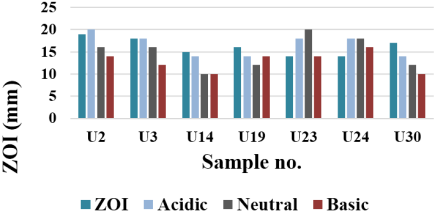
An analysis of the pH levels of the 30 fresh cow urine samples revealed that 8 samples (26.5%) were intrinsically acidic (pH < 6.8), while the remaining 22 samples (73.5%) were basic in nature. A highly significant correlation emerged between the intrinsic pH and the observed antibacterial activity. Of the 8 acidic samples, an overwhelming 7 samples (87.5%) demonstrated potent antibacterial activity. In stark contrast, all 22 basic samples were completely inactive against all tested bacterial strains. This correlation proved statistically significant (χ2 = 24.1, p < 0.001). To investigate whether this action was strictly dependent on the environmental pH, the active acidic samples (n= 7) underwent experimental pH modification. Samples that exhibited activity at their original acidic pH (ranging from 5.31 to 6.48) retained their antibacterial properties when the pH was intentionally shifted; however, the zones of inhibition exhibited a marginal decrease at neutral and basic pH environments compared to their original acidic state. Samples that were intrinsically inactive remained inactive despite laboratory-induced pH modifications.
Table 4. pH potentiality of fresh cow urine.
pH | Activity | Total N (%) |
Active N (%) | Inactive N (%) |
Acidic | 7(23%) | 1(3.5%) | 8(26.5%) |
Basic | 0(0%) | 22(73.5%) | 22(73.5%) |
Total N (%) | 7(23%) | 23(77%) | 30(100%) |
Table 5. Activity of cow urine invarious pH.
Sample | Original | Acidic pH (5.5-5.8) | Neutral pH(7.0) | Basic pH (8.2-8.4) |
pH | ZOI |
U2 | 5.74 | 19 | 20 | 16 | 14 |
U3 | 5.58 | 18 | 18 | 16 | 12 |
U14 | 5.36 | 15 | 14 | 10 | 10 |
U19 | 6.48 | 16 | 14 | 12 | 14 |
U23 | 5.79 | 15 | 18 | 20 | 14 |
U24 | 5.64 | 15 | 18 | 18 | 16 |
U30 | 5.31 | 17 | 14 | 12 | 10 |
Figure 1. ZOI based on pH alteration.
Influence of Urea Concentration
The urea concentration within the 7 active fresh cow urine samples was quantitatively measured and found to range from 249.10 mg/dL to 641.82 mg/dL. Standard, synthetic urea solutions were subsequently formulated at precisely equivalent concentrations to directly test the antimicrobial capacity of urea. These standard urea solutions produced absolute zero zones of inhibition (0 mm) across all tested bacterial isolates. This demonstrated that the antibacterial efficacy of cow urine is fundamentally independent of its inherent urea content.
Table 6. Comparing ZOI of urine urea with standard urea.
Cow urine sample showing antibacterial effect | Urea concentration (mg/dl) | ZOI of Cow urine | ZOI (mm) of applied standard urea concentration |
S.aureus | E. faecalis |
U2 | 319.75 | 20 | 18 | 0 |
U3 | 282.53 | 20 | 16 | 0 |
U14 | 622.75 | 14 | 16 | 0 |
U19 | 249.10 | 14 | 18 | 0 |
U23 | 372.23 | 14 | 16 | 0 |
U24 | 299.36 | 14 | 16 | 0 |
U30 | 641.82 | 16 | 18 | 0 |
Bio-enhancing Capacity of Cow Urine
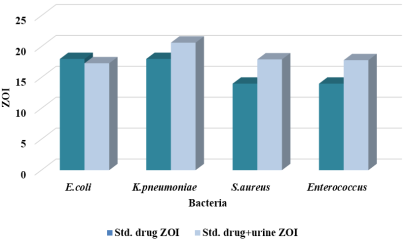
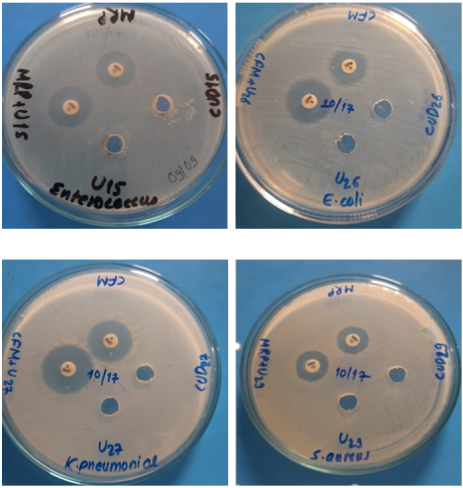
The potential of fresh cow urine to augment the efficacy of standard pharmaceutical antibiotics was evaluated. When applied in combination with standard antibiotic discs, the cow urine induced a statistically significant enhancement in the Zone of Inhibition for three out of the four clinical isolates tested. The most pronounced bio-enhancing effect was observed with Klebsiella pneumoniae. For this Gram-negative isolate, the combination of cow urine and Cefixime yielded a ZOI of 20.63 ± 1.9 mm, representing a highly significant increase (p < 0.0001) compared to the 16.81 ± 2.4 mm ZOI generated by Cefixime therapy alone. Significant bio-enhancement was also evident against the Gram-positive pathogens. The Meropenem-urine combination increased the ZOI for S. aureus from 15.68 ± 3.0 mm to 17.93 ± 4.0 mm (p = 0.0181), and similarly boosted the ZOI for E. faecalis from 15.68 ± 3.0 mm to 17.8 ± 3.1 mm (p = 0.0093). Interestingly, E. coli did not display a statistically significant enhancement in combination therapy (17.3 ± 1.7 mm vs. 16.81 ± 2.4 mm; p = 0.3653).
Figure 2. Bio-enhancing capacity of Cow urine.
Table 7. Bio-enhancing action of Cow urine.
Bacteria | Std. drug ZOI (mm) (Mean±SD) | Std. drug+ urine ZOI(mm) (Mean±SD) | p-value |
Escherichia coli | 16.81±2.4 | 17.3±1.7 | 0.3653 |
Klebsiella pneumoniae | 16.81±2.4 | 20.63±1.9 | 0.0001*** |
Staphylococcus aureus | 15.68±3.0 | 17.93±4.0 | 0.0181* |
Enterococcus faecalis | 15.68±3.0 | 17.8±3.1 | 0.0093** |
Independent t-test
***Significant at the level of 0.001, ** Significant at the level of 0.01, * Significant at the level of 0.05
Figure 3. Bio-enhancingactivityofCowurine.
Growth Inhibition Kinetics (Optical Density)
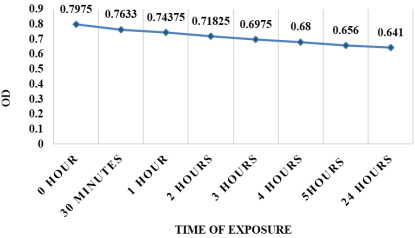
To evaluate the temporal dynamics of bacterial inhibition, suspensions of bacteria in fresh cow urine (n=30) were continuously monitored via spectrophotometry. The optical density (OD) measurements revealed a progressive and steady reduction over a 24-hour incubation period. While initial OD decreases at 30 minutes, 1 hour, and 2 hours were not statistically significant compared to the control, a significant milestone was reached at 3 hours of continuous exposure (p = 0.0305). This bactericidal effect amplified over time, exhibiting significant OD declines at 4 hours (p = 0.0115) and 5 hours (p = 0.0021). At the final 24-hour measurement, the reduction in optical density was highly significant (mean OD 0.641 ± 0.31 vs. control 0.797 ± 0.38, p = 0.0006), verifying strong time-dependent antibacterial activity.
Table 8. AntibacterialactivityofCowurinebymeasuringtheODinvariousexposuretime.
Exposure time | Average OD (mean± SD) | Control OD (mean± SD) | p-value |
30 minutes | 0.767±0.37 | 0.797±0.38 | 0.5361 |
1 hour | 0.743±0.35 | 0.797±0.38 | 0.2534 |
2 hours | 0.718±0.34 | 0.797±0.38 | 0.0910 |
3 hours | 0.697±0.33 | 0.797±0.38 | 0.0305* |
4 hours | 0.680±0.33 | 0.797±0.38 | 0.0115* |
5 hours | 0.656±0.32 | 0.797±0.38 | 0.0021** |
24 hours | 0.641±0.31 | 0.797±0.38 | 0.0006*** |
Independent t-test
***Significant at the level of 0.001, ** Significant at the level of 0.01, * Significant at the level of 0.05
Figure 4. Antibacterial activity of Cow urine.
4. Discussion
The global escalation of antimicrobial resistance necessitates the rigorous exploration of alternative and traditional therapeutic modalities. This study systematically evaluated the antibacterial activity and bio-enhancing potential of cow urine (Gaumutra), a prominent component of traditional Ayurvedic medicine in Nepal and India. Our findings provide in vitro evidence of antibacterial and antibiotic-enhancing activity of fresh cow urine under the conditions tested; they do not by themselves establish clinical efficacy or substantiate its traditional use.
A critical discovery of this investigation is the differential activity among cow urine preparations. Among the fresh, distilled (CUD), and photoactivated forms tested, unequivocally, only the fresh cow urine preparations exhibited measurable antimicrobial activity. This specific finding corresponds with prior research which similarly reported that fresh cow urine functions as a superior antimicrobial agent compared to processed forms. The loss of activity in the distilled and photoactivated preparations suggests that the primary bioactive compounds responsible for the antibacterial effect are likely prone to degradation upon prolonged exposure to intense sunlight and heat processing.Chemoprofiling studies have indicated that fresh cow urine harbors a higher concentration of phenolic compounds compared to distillates, which directly correlates to heightened bactericidal properties
| [5] | Mahajan SP, Chavan SA, Shinde SA, Narkhede MB. Miraculous Benefits of Cow Urine: A Review. J Drug Deliv Ther. 2020; 10(4-s): 275-281.
https://doi.org/10.22270/jddt.v10i4-s.4267 |
| [14] | Jarald E, Edwin S, Tiwari V, Garg R, Toppo E. Antioxidant and Antimicrobial Activities of Cow Urine. Glob J Pharmacol. 2008; 2(6): 20-22. |
[5,14]
.
Furthermore, our results demonstrated a pronounced selective efficacy. The fresh cow urine was exclusively active against the Gram-positive clinical isolates (
Staphylococcus aureus and
Enterococcus faecalis) and completely ineffective against the Gram-negative isolates (
Escherichia coli and
Klebsiella pneumoniae). This phenomenon of selective inhibition aligns closely with broader literature reports. The intrinsic resistance observed in Gram-negative bacteria is fundamentally attributed to their complex outer cell wall membrane. The high lipid content and the specific permeability barrier of the Gram-negative cell envelope efficiently restrict the penetration of the active lipophilic or phenolic constituents present in cow urine, whereas the simpler peptidoglycan structure of Gram-positive organisms renders them highly susceptible to these agents
| [2] | Joshi DR, Aryal P, Chaudhary MK, et al. Study of in-vitro Antioxidant and Antibacterial Activity of Cow Urine from Different Altitudinal and Climatic Region of Nepal. Microbiol Res J Int. 2019; 29(2): 1-8.
https://doi.org/10.9734/mrji/2019/v29i230158 |
| [15] | Kekuda P, Nishanth, Kumar P, Kamal, Sandeep, Megharaj. Cow Urine Concentrate : A potent agent with Antimicrobial and Anthelmintic activity. J Pharm Res. 2010; 3(5): 1025-1027. |
[2, 15]
.
We also established a definitive and statistically significant correlation between the intrinsic acidic pH of the fresh cow urine and its antibacterial capability. 87.5% of the intrinsically acidic samples produced marked zones of inhibition. However, when the pH of these active acidic samples was externally altered to neutral or basic states in the laboratory, the urine retained its activity, albeit with slightly diminished zones of inhibition. This pivotal observation indicates that while an acidic environment is a potent biomarker for active cow urine (likely due to dietary variations, breed, age or specific metabolic states of the cow), the environmental acidity itself is not the sole bactericidal mechanism. Active biochemical compounds inherently present in these acidic samples mediate the effect
| [16] | Khushboo, Kumari M, Kalotra N, Giri A. Evaluation of Physico-Chemical and antioxidant properties of dairy cow, goat and buffalo urine in two different seasons in A Sub-Tropical region of India. Indian J Anim Res. 2021; 55(1): 25-30.
https://doi.org/10.18805/ijar.B-3916 |
[16]
. Additionally, the parallel testing with synthetic urea solutions unequivocally confirmed that the high urea content of cow urine (which was measured up to 641.82 mg/dL) plays no role in the observed antibacterial property.
Perhaps the most compelling therapeutic implication derived from this study is the significant bio-enhancing capacity of cow urine. Bioenhancers are critical in modern pharmacology as they have the potential to reduce the required therapeutic dose of expensive antibiotics, mitigate drug toxicity, and help bypass microbial resistance mechanisms. When utilized as an adjunct, cow urine significantly boosted the zone of inhibition of standard antibiotics (Cefixime and Meropenem) against
K. pneumoniae,
S. aureus, and
E. faecalis. These findings validate the principles underlying US patent no. 6410059 and are highly consistent with foundational research and contemporary network pharmacology investigations
| [4] | Jain NK, Gupta VB, Garg R, Silawat N. Efficacy of cow urine therapy on various cancer patients in Mandsaur District, India-A survey. Int J Green Pharm. 2010; 4(1): 29-35.
https://doi.org/10.4103/0973-8258.62163 |
| [5] | Mahajan SP, Chavan SA, Shinde SA, Narkhede MB. Miraculous Benefits of Cow Urine: A Review. J Drug Deliv Ther. 2020; 10(4-s): 275-281.
https://doi.org/10.22270/jddt.v10i4-s.4267 |
| [6] | Peterson B, Weyers M, Steenekamp JH, Steyn JD, Gouws C, Hamman JH. Drug bioavailability enhancing agents of natural origin (bioenhancers) that modulate drug membrane permeation and pre-systemic metabolism. Pharmaceutics. 2019; 11(1): 33. https://doi.org/10.3390/pharmaceutics11010033 |
| [7] | Krishnamurthi K, Dutta D, Sivanesan SD, Chakrabarti T. Protective effect of distillate and redistillate of cow’s urine in human polymorphonuclear leukocytes challenged with established genotoxic chemicals. Biomed Environ Sci. 2004; 17(3): 247-256.
https://pubmed.ncbi.nlm.nih.gov/15602821/ |
| [17] | Tilwani K, Dave G. Uncovering the Role of Cow Urine as a Bioenhancer Investigated Towards Network Pharmacology. Indian J Pharm Sci. 2023; 85(3): 698-708.
https://doi.org/10.36468/pharmaceutical-sciences.1136 |
[4-7,17]
. The time-kill assay further fortified the clinical relevance of these findings, illustrating that the growth-inhibitory effects of cow urine initiate as early as 3 hours post-exposure and culminate in highly significant bacterial reduction over a 24-hour period.
Recent studies (2023–2024) offer both support and contrast. A cow urine distillate was reported to inhibit both Gram-positive and Gram-negative strains in vitro, and docking analysis suggested that phenolic acids such as ferulic acid and 2-hydroxycinnamic acid may interact with bacterial DNA gyrase
| [18] | Pant L, Thapa S, Dahal B, Khadka R, Biradar MS. In silico and in vitro studies of antibacterial activity of cow urine distillate (CUD). Evid Based Complement Alternat Med. 2024; 2024: 1904763.
https://doi.org/10.1155/2024/1904763 |
[18]
; this contrasts with the lack of activity of the distillate in the present study, which may reflect differences in distillation protocol, concentration, and test strains. Peptide and metabolite profiling has also suggested that the antimicrobial activity of cow urine is related to the feed of the animal through plant-derived metabolites
| [19] | Kumar R, Kaushik JK, Mohanty AK, Kumar S. Identification of bioactive components behind the antimicrobial activity of cow urine by peptide and metabolite profiling. Anim Biosci. 2023; 36(7): 1130-1142. https://doi.org/10.5713/ab.22.0249 |
[19]
, which supports the need to record cow-related variables in future work. A concentrated, solidified cow urine preparation (Gomutra Ghana) likewise showed in vitro antibacterial activity against five bacterial strains
| [20] | Raut PA, Rathi BJ, Wanjari AS, et al. Pharmaceutical analysis and evaluation of in-vitro antibacterial activity of Gomutra Ghana: a concentrated and solidified form of cow’s urine. J Clin Diagn Res. 2024; 18(11): DC06-DC11.
https://doi.org/10.7860/JCDR/2024/68991.20274 |
[20]
.
Despite the promising in vitro outcomes, the study acknowledges certain limitations. The specific active bioactive molecules (such as distinct phenolic or aromatic acid derivatives) were not isolated or chemically characterized during this investigation. Furthermore, the translation of these in vitro efficacies to in vivo models remains to be validated. Viable counts (CFU/mL) were not determined, so bactericidal activity cannot be concluded from the turbidimetric data, and different reference antibiotics were used for the Gram-negative and Gram-positive isolates. Only one clinical isolate per species (four isolates in total) was tested, and species identification relied on conventional biochemical methods, which limits the generalizability of the findings. Cow-related variables such as breed, age, sex, diet, physiological status, time of collection, and storage duration may influence urine composition, pH, and antibacterial activity and may account for part of the variability among the 30 samples; these factors were not controlled or analyzed in this study.
5. Conclusions
This study indicates that fresh cow urine showed selective in vitro antibacterial activity specifically targeting Gram-positive clinical bacterial pathogens, notably Staphylococcus aureus and Enterococcus faecalis. This activity was associated with fresh urine exhibiting an acidic pH profile, and urea alone, at the concentrations tested, did not produce measurable inhibition. Distilled and photoactivated formulations fail to demonstrate analogous efficacy. Fresh cow urine also significantly increased the zone of inhibition of standard antibiotics against both Gram-positive and specific Gram-negative strains (Klebsiella pneumoniae). These in vitro results do not establish clinical efficacy or safety; they suggest that fresh cow urine merits further investigation as a possible adjunct to antibacterial therapy.
Based on these in vitro findings, further research is recommended. Future investigations should focus on the rigorous chemical isolation, extraction, and molecular characterization of the specific bioactive compounds responsible for both the antibacterial and bio-enhancing properties in fresh acidic cow urine. Additionally, comprehensive in vivo clinical trials and pharmacokinetic analyses must be pursued to rigorously evaluate the safety, optimal dosing, and true therapeutic potential of cow urine compounds when administered as adjuncts to standard antibiotic therapies in clinical settings.
Abbreviations
AST | Antimicrobial Susceptibility Testing |
CFM | Cefixime |
CFU | Colony-forming Units |
CLED | Cysteine Lactose Electrolyte Deficient |
CLSI | Clinical and Laboratory Standards Institute |
CUD | Cow Urine Distillate |
FU | Fresh Urine |
HCl | Hydrochloric Acid |
MMIHS | Manmohan Memorial Institute of Health Sciences |
MMTH | Manmohan Memorial Teaching Hospital |
MRP | Meropenem |
NaOH | Sodium Hydroxide |
OD | Optical Density |
PAU | Photoactivated Urine |
SD | Standard Deviation |
US | United States |
ZOI | Zone of Inhibition |
Acknowledgments
We thank the clinical microbiology laboratory staff and Manmohan Memorial Teaching Hospital administration for providing access to data and laboratory facilities. ChatGPT (OpenAI) was used to improve the grammar, language clarity, and readability of the manuscript.
Author Contributions
Soma Kanta Baral: Conceptualization, Data curation, Formal Analysis, Funding acquisition, Methodology, Project administration, Resources, Software, Supervision, Validation, Visualization, Writing – original draft, Writing – review & editing
Mandira Prajapati: Conceptualization, Data curation, Formal Analysis, Investigation, Methodology, Software, Writing – original draft, Writing – review & editing
Indira Parajuli: Conceptualization, Data curation, Formal Analysis, Funding acquisition, Resources, Software, Validation, Visualization, Writing – review & editing
Data Availability Statement
The data that support the findings of this study are available from the corresponding author up on reasonable request.
Conflicts of Interest
The authors declare no conflicts of interest.
References
| [1] |
Rana, R and De S. In vitro antimicrobial screening of cow urine – a potential natural antimicrobial agent. Int J bioassays. 2013; 2(2): 436-439.
https://doi.org/10.1002/jcu.22607
|
| [2] |
Joshi DR, Aryal P, Chaudhary MK, et al. Study of in-vitro Antioxidant and Antibacterial Activity of Cow Urine from Different Altitudinal and Climatic Region of Nepal. Microbiol Res J Int. 2019; 29(2): 1-8.
https://doi.org/10.9734/mrji/2019/v29i230158
|
| [3] |
Yuan H, Ma Q, Ye L, Piao G. The traditional medicine and modern medicine from natural products. Molecules. 2016; 21(5).
https://doi.org/10.3390/molecules21050559
|
| [4] |
Jain NK, Gupta VB, Garg R, Silawat N. Efficacy of cow urine therapy on various cancer patients in Mandsaur District, India-A survey. Int J Green Pharm. 2010; 4(1): 29-35.
https://doi.org/10.4103/0973-8258.62163
|
| [5] |
Mahajan SP, Chavan SA, Shinde SA, Narkhede MB. Miraculous Benefits of Cow Urine: A Review. J Drug Deliv Ther. 2020; 10(4-s): 275-281.
https://doi.org/10.22270/jddt.v10i4-s.4267
|
| [6] |
Peterson B, Weyers M, Steenekamp JH, Steyn JD, Gouws C, Hamman JH. Drug bioavailability enhancing agents of natural origin (bioenhancers) that modulate drug membrane permeation and pre-systemic metabolism. Pharmaceutics. 2019; 11(1): 33.
https://doi.org/10.3390/pharmaceutics11010033
|
| [7] |
Krishnamurthi K, Dutta D, Sivanesan SD, Chakrabarti T. Protective effect of distillate and redistillate of cow’s urine in human polymorphonuclear leukocytes challenged with established genotoxic chemicals. Biomed Environ Sci. 2004; 17(3): 247-256.
https://pubmed.ncbi.nlm.nih.gov/15602821/
|
| [8] |
Upadhyay RK, Dwivedi P, Ahmad S. Antimicrobial activity of photo-activated cow urine against certain pathogenic bacterial strains. Afr J Biotechnol. 2010; 9(4): 518–522.
https://doi.org/10.5897/AJB09.1047
|
| [9] |
Randhawa GK. Cow urine distillate as bioenhancer. J Ayurveda Integr Med. 2010; 1(4): 240–241.
https://doi.org/10.4103/0975-9476.74089
|
| [10] |
Javed S, Ahsan W, Kohli K. The concept of bioenhancers in bioavailability enhancement of drugs – A patent review. J Sci Lett. 2016; 1(3): 143-165.
|
| [11] |
Sathasivam A, Muthuselvam M, Rajendran R. Antimicrobial activities of cow urine distillate against some clinical pathogens. Glob J Pharmacol. 2010; 4(1): 41-44.
|
| [12] |
Khanuja SPS, Singh M, Gupta C, Kumar V, Dawle SH, Naff PE david M. United States Patent : US006410059B1. 2002; 1(60). US006410059B1.
|
| [13] |
Ahuja A, Kumar P, Verma A, Tanwar RS. Antimicrobial activity of cow urine against clinical isolates of human pathogens. Int J Curr Microbiol App Sci. 2015; 4(8): 728-34.
|
| [14] |
Jarald E, Edwin S, Tiwari V, Garg R, Toppo E. Antioxidant and Antimicrobial Activities of Cow Urine. Glob J Pharmacol. 2008; 2(6): 20-22.
|
| [15] |
Kekuda P, Nishanth, Kumar P, Kamal, Sandeep, Megharaj. Cow Urine Concentrate : A potent agent with Antimicrobial and Anthelmintic activity. J Pharm Res. 2010; 3(5): 1025-1027.
|
| [16] |
Khushboo, Kumari M, Kalotra N, Giri A. Evaluation of Physico-Chemical and antioxidant properties of dairy cow, goat and buffalo urine in two different seasons in A Sub-Tropical region of India. Indian J Anim Res. 2021; 55(1): 25-30.
https://doi.org/10.18805/ijar.B-3916
|
| [17] |
Tilwani K, Dave G. Uncovering the Role of Cow Urine as a Bioenhancer Investigated Towards Network Pharmacology. Indian J Pharm Sci. 2023; 85(3): 698-708.
https://doi.org/10.36468/pharmaceutical-sciences.1136
|
| [18] |
Pant L, Thapa S, Dahal B, Khadka R, Biradar MS. In silico and in vitro studies of antibacterial activity of cow urine distillate (CUD). Evid Based Complement Alternat Med. 2024; 2024: 1904763.
https://doi.org/10.1155/2024/1904763
|
| [19] |
Kumar R, Kaushik JK, Mohanty AK, Kumar S. Identification of bioactive components behind the antimicrobial activity of cow urine by peptide and metabolite profiling. Anim Biosci. 2023; 36(7): 1130-1142.
https://doi.org/10.5713/ab.22.0249
|
| [20] |
Raut PA, Rathi BJ, Wanjari AS, et al. Pharmaceutical analysis and evaluation of in-vitro antibacterial activity of Gomutra Ghana: a concentrated and solidified form of cow’s urine. J Clin Diagn Res. 2024; 18(11): DC06-DC11.
https://doi.org/10.7860/JCDR/2024/68991.20274
|
Cite This Article
-
APA Style
Baral, S. K., Prajapati, M., Parajuli, I. (2026). Antibacterial Effect and Bio-enhancing Potential of Cow Urine Against Clinically Isolated Bacteria. American Journal of Biomedical and Life Sciences, 14(5), 105-115. https://doi.org/10.11648/j.ajbls.20261405.12
 Copy
|
 Download
ACS Style
Baral, S. K.; Prajapati, M.; Parajuli, I. Antibacterial Effect and Bio-enhancing Potential of Cow Urine Against Clinically Isolated Bacteria. Am. J. Biomed. Life Sci. 2026, 14(5), 105-115. doi: 10.11648/j.ajbls.20261405.12
Copy
|
Download
AMA Style
Baral SK, Prajapati M, Parajuli I. Antibacterial Effect and Bio-enhancing Potential of Cow Urine Against Clinically Isolated Bacteria. Am J Biomed Life Sci. 2026;14(5):105-115. doi: 10.11648/j.ajbls.20261405.12
Copy
|
Download
-
@article{10.11648/j.ajbls.20261405.12,
  author = {Soma Kanta Baral and Mandira Prajapati and Indira Parajuli},
  title = {Antibacterial Effect and Bio-enhancing Potential of Cow Urine Against Clinically Isolated Bacteria},
  journal = {American Journal of Biomedical and Life Sciences},
  volume = {14},
  number = {5},
  pages = {105-115},
  doi = {10.11648/j.ajbls.20261405.12},
  url = {https://doi.org/10.11648/j.ajbls.20261405.12},
  eprint = {https://article.sciencepublishinggroup.com/pdf/10.11648.j.ajbls.20261405.12},
  abstract = {Infectious diseases remain a serious global health threat, which is increasingly amplified by growing antimicrobial resistance worldwide. Traditional remedies, such as cow urine (Gaumutra), have been historically documented in Ayurvedic medicine for their therapeutic applications. Notably, Cow urine has been granted a US patent (no. 6410059) for its antibacterial and bio-enhancing properties. This study investigates the in-vitro antibacterial activity and bio-enhancing capacity of cow urine against clinically isolated bacterial pathogens. A laboratory-based cross-sectional study was conducted at the Manmohan Memorial Institute of Health Sciences (MMIHS) and Manmohan Memorial Teaching Hospital, Kathmandu. Four clinical bacterial isolates (Escherichia coli, Klebsiella pneumoniae, Staphylococcus aureus, and Enterococcus faecalis) were used. Thirty cow urine samples were collected from various locations in the Kathmandu valley and processed into fresh, distilled, and photoactivated forms. Antibacterial activity was assessed using the agar well diffusion method, comparing the Zone of Inhibition (ZOI) with standard antibiotics. Optical density at 600 nm was recorded to evaluate growth-inhibition kinetics (turbidity). Only fresh cow urine demonstrated antibacterial activity showing effectiveness exclusively against Gram-positive bacteria: Staphylococcus aureus (23%) and Enterococcus faecalis (23%). Antibacterial activity was statistically associated with acidic pH, although activity persisted after pH adjustment. Cow urine also showed significant bio-enhancing capacity when combined with standard antibiotics against Klebsiella pneumoniae (20.63±1.9 mm), Staphylococcus aureus (17.93±4.0 mm), and Enterococcus faecalis (17.8±3.1 mm). Urea alone, at the concentrations measured in the active samples, produced no measurable inhibition under the experimental conditions. Overall, fresh cow urine exhibited measurable in vitro antibacterial and antibiotic-enhancing activity under the conditions tested, particularly against Gram-positive bacteria. Further studies are warranted to identify and characterize the bioactive compounds responsible for these activities and to elucidate their potential mechanisms of action.},
 year = {2026}
}
Copy
|
Download
-
TY  - JOUR
T1  - Antibacterial Effect and Bio-enhancing Potential of Cow Urine Against Clinically Isolated Bacteria
AU  - Soma Kanta Baral
AU  - Mandira Prajapati
AU  - Indira Parajuli
Y1  - 2026/10/31
PY  - 2026
N1  - https://doi.org/10.11648/j.ajbls.20261405.12
DO  - 10.11648/j.ajbls.20261405.12
T2  - American Journal of Biomedical and Life Sciences
JF  - American Journal of Biomedical and Life Sciences
JO  - American Journal of Biomedical and Life Sciences
SP  - 105
EP  - 115
PB  - Science Publishing Group
SN  - 2330-880X
UR  - https://doi.org/10.11648/j.ajbls.20261405.12
AB  - Infectious diseases remain a serious global health threat, which is increasingly amplified by growing antimicrobial resistance worldwide. Traditional remedies, such as cow urine (Gaumutra), have been historically documented in Ayurvedic medicine for their therapeutic applications. Notably, Cow urine has been granted a US patent (no. 6410059) for its antibacterial and bio-enhancing properties. This study investigates the in-vitro antibacterial activity and bio-enhancing capacity of cow urine against clinically isolated bacterial pathogens. A laboratory-based cross-sectional study was conducted at the Manmohan Memorial Institute of Health Sciences (MMIHS) and Manmohan Memorial Teaching Hospital, Kathmandu. Four clinical bacterial isolates (Escherichia coli, Klebsiella pneumoniae, Staphylococcus aureus, and Enterococcus faecalis) were used. Thirty cow urine samples were collected from various locations in the Kathmandu valley and processed into fresh, distilled, and photoactivated forms. Antibacterial activity was assessed using the agar well diffusion method, comparing the Zone of Inhibition (ZOI) with standard antibiotics. Optical density at 600 nm was recorded to evaluate growth-inhibition kinetics (turbidity). Only fresh cow urine demonstrated antibacterial activity showing effectiveness exclusively against Gram-positive bacteria: Staphylococcus aureus (23%) and Enterococcus faecalis (23%). Antibacterial activity was statistically associated with acidic pH, although activity persisted after pH adjustment. Cow urine also showed significant bio-enhancing capacity when combined with standard antibiotics against Klebsiella pneumoniae (20.63±1.9 mm), Staphylococcus aureus (17.93±4.0 mm), and Enterococcus faecalis (17.8±3.1 mm). Urea alone, at the concentrations measured in the active samples, produced no measurable inhibition under the experimental conditions. Overall, fresh cow urine exhibited measurable in vitro antibacterial and antibiotic-enhancing activity under the conditions tested, particularly against Gram-positive bacteria. Further studies are warranted to identify and characterize the bioactive compounds responsible for these activities and to elucidate their potential mechanisms of action.
VL  - 14
IS  - 5
ER  -
Copy
|
Download





 Share This Article
 Twitter
 Linked In
 Facebook